Why a Good Resume Matters for Career Success

A resume often decides whether a qualified person gets a closer look or disappears into a stack of similar applications. That makes it more than a document. It is a career tool that explains value, judgment, readiness, and direction in a format employers can review quickly.
A strong resume does not guarantee an interview, but a weak one can prevent an interview from ever happening. Many candidates have the skills to do the work. Fewer present those skills clearly, honestly, and in a way that matches what hiring teams need to see.
Good resume writing is not about sounding impressive at any cost. It is about making the right information easy to find, easy to trust, and easy to connect to the role.

A resume creates the first professional impression
Before a conversation, interview, portfolio review, or reference check, the resume usually speaks first. It shows how a candidate organizes information, understands priorities, and communicates qualifications.
A good first impression comes from three qualities:
Clarity
The reader can quickly identify the target role, relevant experience, skills, and career progress.
Relevance
The content reflects the role being pursued, not every task the candidate has ever performed.
Credibility
Claims sound realistic and are supported by specific experience, outcomes, or responsibilities.
Hiring teams often review resumes under time pressure. They are looking for signs of fit, not hidden potential buried in dense paragraphs. A strong resume respects that reality. It guides the reader to the strongest evidence first.
Small details matter. Misspellings, inconsistent formatting, unclear dates, and vague language can create doubt. They may suggest a lack of care, even when the candidate is highly capable. By contrast, a polished resume signals discipline and attention to detail.
That does not mean the resume must look elaborate. In most fields, clean structure and strong content matter more than design effects. A simple, accurate, well-organized resume can outperform a visually busy one that distracts from the candidate’s qualifications.
A good resume connects experience to the role
One of the most common resume mistakes is listing duties without showing relevance. A job description explains what a person was assigned to do. A strong resume explains what the person contributed.
For example, a weak bullet might say:
Responsible for customer service and daily reports.
A stronger version would be:
Resolved customer inquiries, documented recurring issues, and prepared daily reports that helped supervisors track service trends.
The second version gives the reader a clearer picture. It shows action, context, and purpose. It also helps connect the work to skills that may matter in several roles, such as communication, documentation, and problem solving.
This is where resume building becomes strategic. The goal is not to rewrite a career history from scratch for every opening. The goal is to identify which parts of the candidate’s background are most meaningful for the position and present them with precision.
A strong resume answers questions a hiring manager is likely to ask:
Has this person done similar work before?
Can this person learn quickly if the work is new?
Does this person understand the responsibilities of the role?
Are the accomplishments specific enough to trust?
Is the career path reasonable and easy to follow?
When the resume answers these questions well, the reader has fewer doubts and more reasons to continue.

A resume helps employers see value quickly
Most resumes are not read like essays. They are scanned first. If the scan reveals a strong match, the reader may slow down and examine details.
That makes structure essential. A good resume uses sections that create a logical path:
Resume section | What it should do |
Contact information | Make it easy to reach the candidate without clutter |
Professional summary | State the candidate’s focus and strongest qualifications |
Skills | Highlight relevant abilities that support the role |
Experience | Show work history, responsibilities, and results |
Education and credentials | Confirm required training, degrees, or certifications |
Projects or volunteer work | Add relevant evidence when paid experience is limited |
The best structure depends on the candidate’s background. Someone with years of related experience may lead with a concise summary and detailed work history. A recent graduate may need to highlight internships, projects, coursework, technical skills, or volunteer work.
No matter the background, the guiding rule is the same: place the most relevant evidence where it will be seen quickly.
A strong resume also uses language that fits the role. If a job posting calls for scheduling, customer support, data entry, compliance, inventory control, or project coordination, the resume should reflect matching experience when it is accurate. This helps both human reviewers and applicant tracking systems understand fit.
At the same time, keyword use should remain natural. A resume packed with repeated terms can feel forced. The strongest resumes use accurate terms in context, supported by real examples.
A good resume builds confidence during the hiring process
A resume is not only for employers. It also helps the candidate prepare.
When a resume is clear and well organized, it becomes a foundation for interviews. The candidate can review accomplishments, recall examples, and explain career choices with more confidence. That preparation can improve the quality of interview answers.
For instance, a resume bullet about training new employees can lead to a strong interview story about leadership, patience, and communication. A bullet about reducing errors can support a discussion about process improvement. A project entry can help explain technical ability, teamwork, or initiative.
A good resume also reduces anxiety because it creates a coherent career narrative. Many people have work histories that include transitions, gaps, short-term roles, career changes, or varied responsibilities. These details do not automatically weaken a resume. Poor explanation weakens them.
The resume should frame a career path honestly and calmly. It should show what the candidate has learned, where the strongest skills are, and how past experience supports future goals.
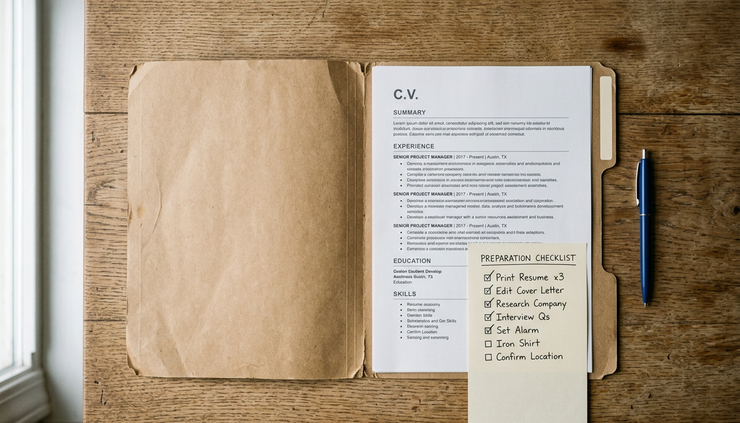
A resume can open doors beyond one application
A strong resume has uses beyond submitting applications. It can support networking conversations, recruiter outreach, internal promotions, graduate school applications, career coaching, and professional introductions.
When someone asks for background information, a prepared resume provides a reliable summary. It can help others make referrals because they can clearly see the person’s strengths and goals. It also makes it easier to update online profiles, write cover letters, or prepare a short professional biography.
A resume also helps identify gaps. When a candidate reviews the document, patterns become visible. The resume may show that certain skills need stronger examples, that measurable results are missing, or that a certification could improve competitiveness. In that sense, the resume becomes a planning tool, not only an application tool.
For career changers, this is especially valuable. A resume can translate experience from one field into language that another field understands. A teacher moving into training, a retail supervisor moving into operations, or a military veteran moving into logistics may have highly relevant skills. The resume must make those connections clear.
Good resumes do not ask readers to guess. They build a bridge between past work and future opportunity.
Weak resumes create unnecessary barriers
Many capable candidates lose momentum because their resumes create confusion. The problem is rarely one single flaw. More often, several small issues combine to reduce trust.
Common barriers include:
Unclear job titles or unexplained role changes
Long paragraphs that hide the strongest qualifications
Generic summaries that could apply to anyone
Missing dates or inconsistent date formats
Overly broad skill lists without evidence
Responsibilities listed with no results or context
Formatting that is difficult to read on a screen
Claims that sound exaggerated or unsupported
A resume should never make the reader work hard to understand basic facts. If a hiring manager has to search for dates, role relevance, or core skills, the application may be set aside.
The solution is usually not a complete reinvention. Many resumes improve significantly through careful editing. Removing weak content can be as useful as adding new details. Clearer bullets, stronger section order, and more specific language can change how the entire document reads.
The strongest resumes are honest, specific, and focused
A good resume should present the candidate in the best accurate light. It should not inflate titles, invent metrics, exaggerate responsibilities, or hide important facts. Short-term gains from misleading information can damage credibility later in the hiring process.
Specificity is more effective than exaggeration. Compare these two statements:
Helped improve team performance
Trained five new team members on order processing procedures and daily quality checks
The second statement is stronger because it gives concrete information. It does not need dramatic language. It gives the reader something real to evaluate.
When numbers are available, they can help. Sales volume, customer satisfaction results, error reduction, time saved, caseload size, inventory value, training hours, or project scope can add substance. If exact numbers are not known, context still helps. A candidate can describe the type of work, frequency, scale, tools used, or stakeholders served.
The best resumes also stay focused. Every line should earn its place. Older experience, unrelated tasks, and outdated skills may need to be shortened or removed. A resume is not a full autobiography. It is a selected professional summary designed for a specific purpose.
A professional resume supports career growth over time
A resume should evolve as a person’s career evolves. Waiting until an urgent application deadline often leads to rushed writing and forgotten details. Maintaining the resume over time makes it easier to capture accomplishments while they are still fresh.
A practical habit is to update the resume after major milestones, such as:
Completing a project
Earning a certification
Taking on new responsibilities
Receiving a promotion
Learning a new tool or process
Leading training or mentoring others
Improving a workflow or solving a recurring problem
These updates do not always need to appear in the final version. Some can remain in a master resume, a longer document that stores all career details. From there, a shorter targeted resume can be created for each opportunity.
This approach saves time and improves quality. It also helps during performance reviews, promotion discussions, and professional planning. A person who can clearly describe their contributions is better prepared to advocate for the next step.

What a good resume should accomplish
A good resume should do more than list employment history. It should help the reader understand the candidate’s value with minimal effort.
At its best, a resume accomplishes several goals:
It introduces the candidate clearly.
It shows relevant experience and skills.
It supports claims with specific examples.
It fits the expectations of the role and industry.
It creates confidence in the candidate’s communication and judgment.
It gives the employer a reason to start a conversation.
That final point matters most. The resume does not need to answer every possible question. It needs to earn enough interest for the next step.
For anyone serious about career progress, improving a resume is one of the most practical investments of time. It can sharpen professional focus, strengthen applications, and improve interview preparation. A strong resume will not replace skill, experience, or character, but it can make sure those qualities are seen.
The best next step is simple: review the resume as a hiring manager would. Look for clarity, relevance, proof, and focus. If the document quickly explains why the candidate is a strong fit, it is doing its job. If it does not, revising it may be one of the most valuable moves in the entire job search.



Comments